I admit, I think I’m in the minority on this one. (Maybe for good reason—you decide.) Most books on simplifying I’ve read begin with a chapter(s) on decluttering. I understand why that might be: decluttering is tangible, visible, and obvious progress. And while I certainly think that anyone can, right now, walk around their home and pick up 30 items to throw out, recycle, or donate, I personally wouldn’t advise you to start there.
Why Not?
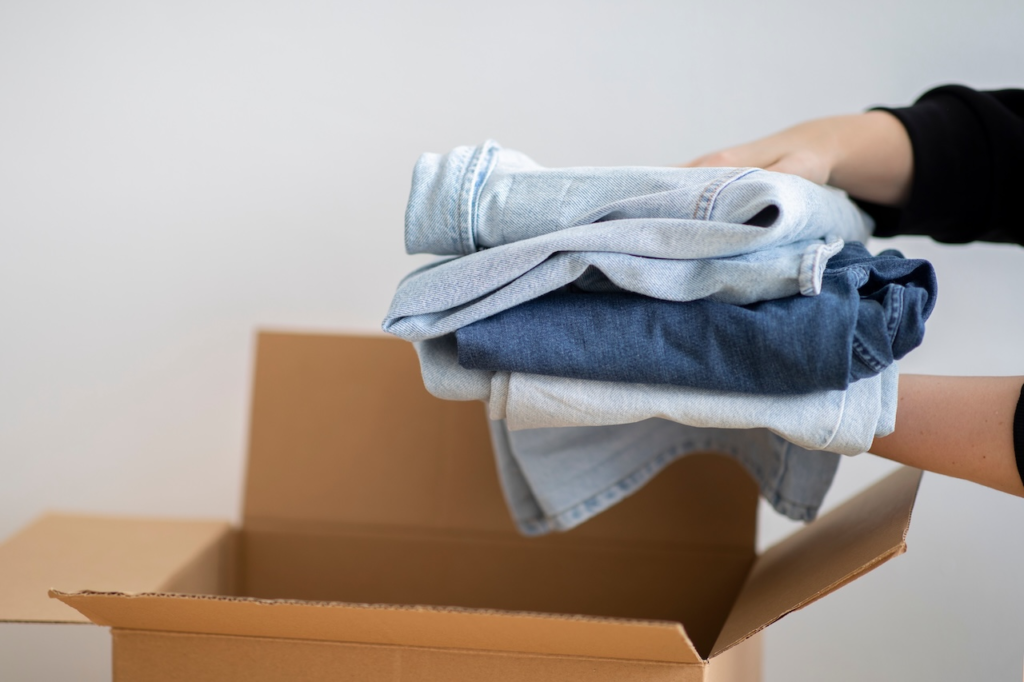
Because simple living is intentional living. To the extent that simplifying our possessions is part of simplifying our lives, simple living asks us to be intentional with our shopping decisions and with every new item we bring into our homes. The first objective shouldn’t be to throw out a large portion of what we own; it should be to stop the flow of stuff into our homes. If you buy, like the average American, 53 items of clothing every year, donating all your unwanted, unneeded clothes isn’t going to make you shop less. More likely, you’ll purge with enthusiasm, then months later miss something you gave up, and buy new things to fill your closet. Simplifying is not an excuse to buy a new wardrobe.
Where did it all come from?
Decluttering is important, but before you declutter, ask yourself how you ended up with so much stuff you no longer want. What habits led you to this excess? Has shopping been your hobby? Do you hit the mall every other weekend? Do you browse Amazon during your breaks? Are you pulled in by marketing emails from your favorite brands advertising a sale? Are you influenced to buy stuff you see on TikTok, Instagram, YouTube?
Advertising is so much more pervasive in our lives than it used to be—sure, we had TV commercials, billboards, and magazine ads. But today, a simple Google search will bring up ads. Nearly every free website is financed by ads. Social media posts are often ads in themselves. And shopping has never been easier. You used to have to physically go to a store, or maybe fill out a catalog order form. Today, we can shop online, even directly on some social media platforms. Our credit card information and shipping address are saved. We can use Buy Now Pay Later companies to make the financial burden feel like less. Buying stuff has never been so friction-less. No wonder we feel overwhelmed by our purchases!
I know you’re feeling motivated, and I won’t tell you not to declutter anything. So go ahead and fill up a box of donations. Certainly pick up anything that goes right into the trash or recycling—broken stuff, junk mail, the like. But take a breather before you jump into a full-on, house-wide, journey-to-minimalism decluttering project. If you don’t change the habits that filled up your space in the first place, you’ll end up in the same situation in two, five, eight years.
Where to Start Instead
Start instead with a No Buy challenge. I wrote about the No Buy Year, but a No Buy can be any length of time. It could be 3 months, 6 months, whatever works for you and your goals. The point of the No Buy (in this context) is to reset your shopping habits.
If you’re anything like the average American, consider these facts about clothing. The average American buy 53 items of clothing a year.1 And yet, 65% of clothing items are thrown out within a year of their purchase.2 In 2022, Vogue published an article arguing that a “sufficient” wardrobe for someone living in a four-season climate is 85 garments (and even less for those in a two-season climate).3 The article also cited a recent report finding that we should each buy only 5 new clothing items a year if we want to meet the goals of the Paris Agreement.4
What all these numbers tell us is that the average American buys far more clothing annually than they could possibly need. Donating half your wardrobe doesn’t stop that cycle. If the clothing keeps coming into your house, it won’t matter how much you purge. Your closet will be full again in a few months.
This same logic applies to any category of possessions: books, electronics, stationery, cooking gadgets, jewelry, cosmetics, hobby supplies, etc.
For more on how to do a No Buy Challenge, read my post here.
During the No Buy
Consider your impulse buys. Throughout the month or months of the No Buy, make note of the things you’re tempted to purchase. Awareness is the first step towards changing your shopping habits. (And by “shopping,” I really mean acquisition. Maybe you take lots of freebies from conferences or take lots of books from Little Free Libraries. For purposes of simplifying your possessions, those are things you’re bringing into the house just as much as any article of clothing you purchase.)
During a No Buy, you may need to purchase more perishable items such as skincare and healthcare products. But use up the self-care products you have before replacing them. Use all the moisturizer you have before you buy another moisturizer. Use up your skincare products, make-up, sunscreen, haircare products, dental care products, etc. (Do check expiration dates, however, as these types of products do expire. Take the opportunity to note what products have expired because you never used them, and don’t buy the same product in the future.)
After the No Buy
After the No Buy period, start decluttering. You’ll have a better sense of what, out of all that you own, you regularly use. Especially if you’ve done 6-12 months of a No Buy, you’ll be able to ask yourself, as you pick up each item, Have I used this at all during the No Buy? You’ll stop shopping because you’re bored; you’ll stop being bored by the things you own. You’ll know what you want to be rid of, and that’s great, but you’ll stop wanting to get rid of things just because you want to buy a better version of that thing. Most likely, you will better appreciate what you have.
Continue to be aware of manufactured wants that may prompt you to buy something. Create barriers to shopping, such as deleting online shopping accounts, unsubscribing from promotional emails, and waiting 48 hours before buying an item you see. Whenever you see an item that tempts you, ask yourself first if you recently decluttered something similar. If you did, you definitely don’t need that thing.
(Check out these 15 Easy Ways to Simplify and Save Money.)
Whether you start with a declutter or a No Buy, a successful declutter goes hand-in-hand with introspection. The key to maintaining a simple home after your declutter is over is to be more intentional with your purchases going forward. So you want to simplify? Work on simplifying the list of material possessions you want to own.